




Skip to Main Content

If you need immediate assistance, please call 1-800-295-2392 or click below to call one of our regional representatives.  Call Regional Customer Service Representative

Click here to view our privacy policy

Literature Form Request

Request your copy of Momentive literature by filling out the form below.

* - required fields.

This field is mandatory

Terms Of Use

This field is mandatory

The requested document has been already submitted for approval.

Silicone Elastomers for Aerospace, Aviation, and Defense

Silicone Elastomers for Aerospace, Aviation, and Defense

When it comes to accuracy, dependability, and safety in the aerospace sector, advanced materials are critical. Silicone elastomers play key roles and can be found, ranging from the cockpit to cabin, and the cargo to engine components. Momentive's line of high-consistency rubber (HCR) and liquid silicone rubber (LSR) technologies can offer numerous advantages in aerospace applications, manufacturing, and operations processes. 

Why Momentive Silicone Elastomers for Aerospace?

  • Silicone is one of the most trusted sealing materials for aerospace manufacturing because of its versatility and reliability to withstand extreme temperatures and environmental conditions.
  • Momentive offers both HCR and LSR technologies that help aerospace customers meeting a broad range of needs.
Momentive Silicone Elastomers for Aerospace

Momentive’s Silicone Products Can Provide:

  • Long-term stability throughout a broad range of temperatures.
  • Sustained flexibility, adhesion, and sealing.
  • Protective seals to keep out dust, moisture, and humidity.
  • Fuels and solvent resistance.
  • Electrical insulation for critical electronic components.
  • Low outgassing solutions to protect and seal against components such as: optics, solar arrays, avionics, and crew compartments.
  • Flame retardant technologies.
Momentive’s Silicone Products Solutions provide aviation the necessary applications

Momentive’s Silicone Technologies Offer Several Advantages

Thermal versatility

  • Silicone can withstand both high and low temperatures, remaining flexible and elastic from -58°F to 392°F. (-50°C to 200°C)

Chemical resistance

  • Silicone’s chemical properties are unalterable even heated and crosslinked, allowing it to maintain its properties in a wide range of environmental conditions.

Electrical properties

  • Silicone’s electrical properties make it ideal for insulation and protecting precise conductivity.

Low viscosity

  • Silicone’s low viscosity and ease of metering make it ideal for precise molding.
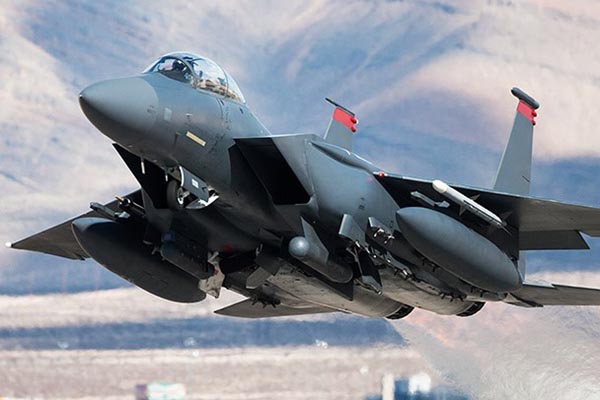
An F-15E Strike Eagle taking off.

Aerospace Applications Include:

Seals and gaskets

  • Because LSR can withstand temperatures ranging from -50°C to 200°C, it is an excellent material for sealing important aeronautical parts. Cabin windows, fuel systems, hydraulic lines, landing gear, and other components can all use LSR gaskets or seals designed to withstand severe weather and high pressure.

Electric insulation

  • When it comes to insulating electrical components in aeronautical applications, LSR offers outstanding dielectric properties and thermal stability. LSR provides consistent protection against moisture, chemicals, and temperature changes, helping enhance the longevity of avionics systems.

Structural elements

  • LSR’s inherent lightweight and molding properties make it a desirable choice when designing critical aircraft components.

Vibration dampening

  • HCR offers excellent tear strength and flexibility that helps reduce vibrations by absorbing shock in essential aircraft components and engine mounts, reducing disturbances and enhancing overall passenger comfort.

Thermal management

  • Because silicone elastomers can endure temperatures from -50°C to 200°C, they provide excellent thermal control in aircraft engines, avionics, and cabin systems. HCR offers exceptional thermal and weatherability performance in applications like electronic enclosures and insulation.
Space Launch System Takes Off. 3D Scene.

Momentive's silicone elastomer solutions are robust and dependable, making them capable of withstanding the demanding requirements of the aerospace sector.